A driver’s sporting and professional career can experience setbacks. Inconsistent results, a sponsor pulling out, or a lack of technical chemistry with a team can all create difficult situations. We take a closer look at how these challenges can be managed and explore how a “tough spell” can be used as an opportunity to reorganise, reset and ultimately come back stronger.
Published: 20 August 2026
Columns: Close Up
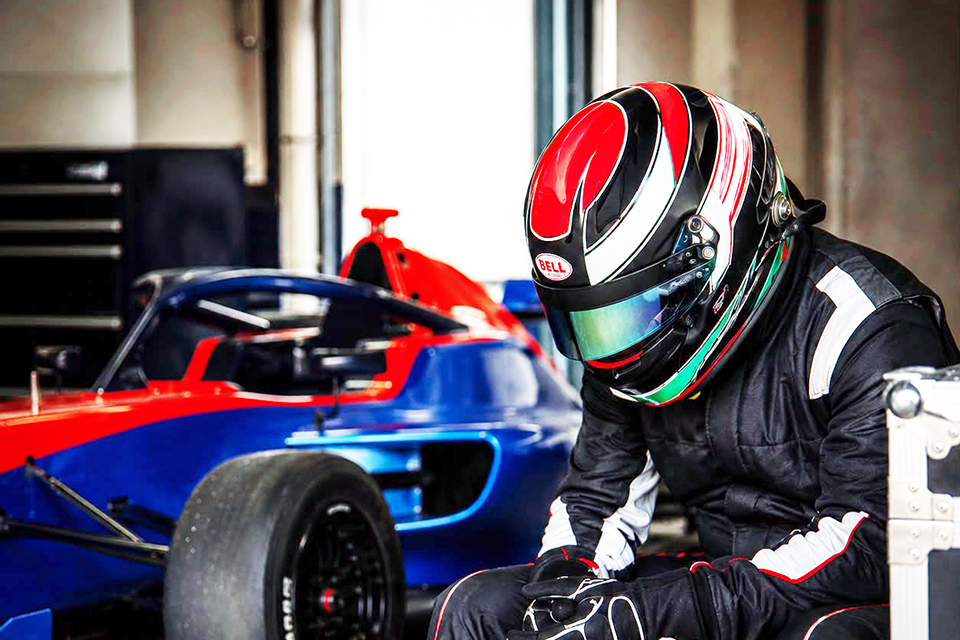
When a career combines sporting performance with professional ambitions, difficulties are not an exception. Quite the opposite: they are often part of the everyday reality of anyone involved in motorsport management. For a driver, who must first and foremost focus on delivering on track, managing a difficult period can be an unprecedented challenge. At times like these, it is essential not to lose sight of the bigger picture and to keep priorities in the right order, without allowing disappointment to become discouraging. When viewed from the right perspective, a setback can instead provide the foundations for a decisive turning point.
How often, in your work, do you come across a driver going through a difficult period?
From our perspective, it happens fairly regularly, because motorsport is an extremely selective and complex sport in which development rarely follows a perfectly linear path. However, we prefer to talk about “challenging periods” or stages of development rather than genuine crises. A talented driver may go through a phase in which the results do not reflect their potential, but that does not necessarily mean that the career path is wrong or that the talent has disappeared.
The role of DAG Management is precisely to look at the bigger picture: results, technical progression, the quality of the work with the team, maturity, the ability to handle pressure and medium- to long-term objectives. Sometimes what appears from the outside to be a crisis is simply a necessary phase of adaptation. Our job is to avoid impulsive reactions, analyse what is happening objectively and turn that period into a constructive step in the driver’s development.
Another fundamental aspect of our role as management is trying to anticipate certain difficulties before they develop into genuine crises. We build an as individualised a pathway as possible for each driver, because talent, age, experience, maturity, objectives and financial resources are different in every case. There is no single programme that is right for everyone. Some difficulties are an essential part of development and should not be removed: learning how to lose, competing against stronger opponents, adapting to a new category or going through a period in which results are slow to arrive are all experiences that can make a driver more complete.
There are, however, situations that an experienced management structure, with a broader understanding of the motorsport landscape, can try to prevent: choosing the wrong team or championship, moving up a category too early or too late, making a significant financial investment at the wrong time, or committing to a programme that carries high costs without providing genuine sporting progression. After so many years in motorsport, we have the advantage of being able to look beyond the present situation and consider what a particular decision could mean one, two or three years down the road. Of course, it is impossible to predict everything. But one of the most important responsibilities of DAG Management is precisely this: allowing the driver to face the challenges that are necessary for development, while using experience, planning and knowledge of the system to shield them from those that add no real value to their career.
Apart from sporting results — perhaps the most obvious cause of frustration — what other factors can cause a driver to go through a crisis?
Results are naturally the most visible aspect, but they are rarely the only factor. Motorsport involves an enormous number of variables: moving into a more competitive category, adapting to a new team or a new car, competing against more experienced drivers, personal expectations, pressure from the surrounding environment, school or professional commitments and, naturally, the financial sustainability of the programme.
For young drivers, it is also important to learn that performance and results are not always the same thing. You can have an excellent race weekend without achieving the result you were expecting, just as a positive result can sometimes hide areas that still need work.
As management, we therefore try to keep the focus on the process: what did we learn, where did we improve, what data did we collect and what is the next step? This perspective helps the driver avoid defining their own value solely by their finishing position.
.jpg)
In your experience, what generally has the greatest impact on a driver’s enthusiasm, and how does this change with age? For example, a child or young driver may become discouraged because they are not winning, whereas an older driver may struggle because their career is not progressing as expected.
Age has a major influence on the way a difficulty is perceived A child or young karting driver can experience not winning, or seeing a peer achieve better results, very intensely. At that stage, it is essential that the adults around them — family, team and management — convey the right message: results matter, but the priority is to build skills, a working method, confidence and the ability to learn.
As drivers get older, the concerns become more complex. A driver approaching the professional ranks begins to deal with timing, budgets, opportunities, category choices and career prospects. They may develop the feeling that certain milestones have to be achieved “by a certain age”.
This is where management becomes particularly important, because it must build a vision that is both realistic and ambitious, while avoiding unnecessary comparisons with somebody else’s career path. Every career has its own timing, opportunities and dynamics.
At any age, what probably has the greatest potential to undermine enthusiasm is the feeling that there is no clear direction. When a driver understands why they are following a particular path, what the objectives are and which steps are required to achieve them, even a difficult phase becomes much easier to manage.
Sometimes a factor is completely outside the driver’s control: a sponsor that made commitments at the beginning of the season subsequently pulls out or changes its plans. What have you seen over the years, and how can these situations be managed without panicking?
It is a situation that can happen and one that must be handled with a high degree of professionalism.
Sponsors are fundamental partners in motorsport, but companies can change their strategy, budgets and priorities for reasons that have nothing to do with either the driver or the sporting project. The first rule, therefore, is not to immediately turn a commercial decision into a personal judgement. From a management perspective, preventive planning is extremely important: building realistic budgets, clearly defining commitments, diversifying partnerships whenever possible and maintaining professional, ongoing communication with sponsors.
If circumstances change, the first step is to understand why and establish what alternatives are available: restructuring the programme, looking for new partners, redefining certain activities or putting a temporary solution in place.
Panic almost always leads to rushed decisions. Management must instead protect the driver from that pressure and maintain a strategic vision. Even a budgetary setback can become an opportunity to make the project more structured, improve the driver’s communication and build partnerships that are even more consistent and long-lasting.
To what extent can difficulties away from the track affect a driver’s performance, and how can a driver, at least during a race weekend, manage to “switch off” from those problems and give their very best?
They can have a significant impact, particularly because performing at a high level in motorsport requires an extremely high degree of concentration.
A driver arriving at the circuit with financial, contractual, organisational or personal problems on their mind will inevitably be using mental energy that should be devoted to driving. This is precisely where we see one of the key values of a management structure.
The driver should not be involved in every phone call, negotiation or problem that arises during a race weekend. They need to be informed about what is genuinely relevant to them, but they also need to be protected from the noise that does not contribute to their performance. Management, family, coaches and the team must all work in the same direction, creating a stable environment around the driver. The “bubble” does not mean ignoring problems; it means establishing clear roles and timing. During a race weekend, the driver should focus on briefings, data, physical and mental preparation, driving and communication with the engineers. Other matters can be handled by the people responsible for them and addressed at the appropriate time. Learning to create this separation is a professional skill that becomes increasingly important as a driver moves up through the categories.
.jpg)
Have you ever dealt with situations where a driver lacked technical chemistry with a team and this affected performance? When do you think it is worth addressing the situation with the team, and when does it become better for both sides to end the relationship?
Yes, it can happen, and it is one of the areas where the greatest degree of balance is required. The technical relationship between a driver and a team is fundamental, but we do not believe that changing teams at the first sign of difficulty is automatically the solution. Every partnership needs time to build trust, a common language and mutual understanding. Particularly for a young driver, learning how to properly communicate what they are feeling from the car or kart is itself part of the development process. When difficulties emerge, the first step should be a professional discussion. Data, driver feedback, working methods and expectations need to be analysed, involving the appropriate technical personnel. Management can play an important role here because it can observe the situation from a more detached perspective and facilitate constructive communication between the driver, family and team.
We would only consider a change after an appropriate period of work and several concrete attempts to improve the situation, once it becomes clear that the conditions for progressing together are no longer there. It should not be an emotional decision, nor a search for someone to blame. Sometimes two excellent organisations simply cannot bring out the best in each other. In that case, parting ways correctly and professionally can be positive for both sides. But before reaching that point, you have to be certain that every opportunity offered by the existing partnership has been properly explored.
How can successfully managing pressure and overcoming difficult periods contribute to the development of a young driver, and when can it instead become a handicap? What should be avoided to prevent temporary difficulties from jeopardising an entire sporting and professional career?
When managed correctly, difficulties have enormous educational value. Motorsport teaches you very early that not everything is within your control: a race can change because of contact, a technical decision, the weather or an external circumstance. Learning how to react, analyse what happened and start again builds resilience that will be invaluable throughout a driver’s career. A difficult period becomes a handicap when it is constantly perceived as someone’s fault, when a young driver feels that their value depends exclusively on the result, or when a permanent atmosphere of pressure develops around them.
This is why it is essential for the family, team and management to maintain clear roles and consistent communication. Above all, impulsive decisions should be avoided.
Constantly changing teams, categories, coaches or programmes in search of an immediate solution can make it impossible to build continuity. At the same time, genuine warning signs must not be ignored. The key is to distinguish between a normal stage of development and a situation that requires structural change.
In our view, this ability to read the situation is one of the most important responsibilities of management.
Constantly changing teams, categories, coaches or programmes in search of an immediate solution can make it impossible to build continuity. At the same time, genuine warning signs must not be ignored. The key is to distinguish between a normal stage of development and a situation that requires structural change.
In our view, this ability to read the situation is one of the most important responsibilities of management.
Looking at the bigger picture, is it possible to turn a crisis into an opportunity on the road to becoming a professional driver? What mindset is required, and how can surrounding yourself with the right people be the key to coming through it?
Absolutely. A crisis can become an opportunity when it is analysed rather than simply endured. Difficult periods often force you to ask questions that you might not consider when everything is going well: is this the right programme? Is the driver working on the right areas? Are the objectives realistic? Are the team and the surrounding environment supporting the driver’s development? Is the physical, mental and communication preparation appropriate for the level we want to reach?
The required mindset is that of a professional: being willing to listen, having the ability to be self-critical without losing confidence, patience, discipline and the determination to keep working. But no young driver should be expected to manage all of this alone. Surrounding yourself with the right people means creating a group in which different areas of expertise are working towards the same objective: family, management, team, coaches, fitness trainers and partners.
For DAG Management, the value of an agency is not measured only when the results arrive. It is probably even more evident when something does not go according to plan.
That is when you need to remain clear-headed, protect the talent, identify solutions and continue building. There is no completely trouble-free path through motorsport. What makes the difference is how those difficulties are handled.
If talent is supported by a structured approach, patience and the right people, even a challenging period can become one of the most important stages on the road to a professional career. This is why we believe that management should also have a preventive role. We are not alongside a driver simply to solve problems when they arise, but to build a career path in which some problems can be anticipated and, whenever possible, avoided.
Experience allows us to recognise situations we have seen before, assess timing and opportunities more effectively, and protect the driver from decisions that could cost them not only money, but something even more valuable in a sporting career: time.
We cannot, and do not want to, eliminate every difficulty, because some of them are necessary to become better drivers and better professionals. What we do want is to ensure that, whenever possible, every difficulty has a purpose within the career path we are building. For us, that is one of the fundamental differences between simply accompanying a career and managing it with a genuine long-term vision.
.jpg)
-

Mia Zanki, double achievement: victory and title clinched early!
-

Rotax E20 ahead of RMC Euro Trophy season final Trinec
Browse Related Articles
Close Up


Close Up
26/06/26