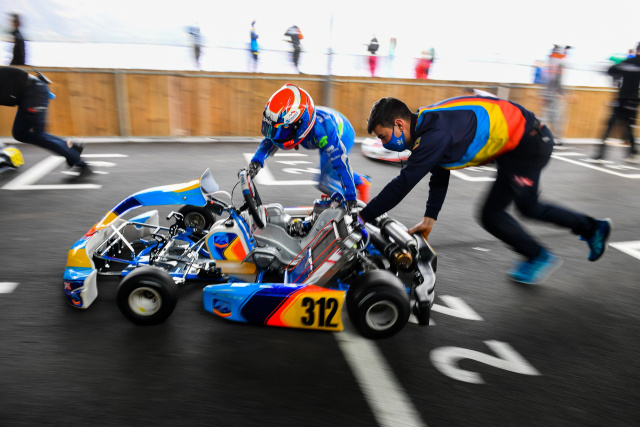
Their success, especially in children's classes, attracts attention and sometimes even arouses a slight envy of rivals. Do you remember that race where the first seven fastest drivers were from Russia? So, what is the secret of Russian pilots? Perhaps it's all about the mysterious Russian soul, as Russian racers like to joke? Or maybe in some kind of special training? Let's figure it out!
Modern sports karting in the form in which we know it now began in Russia in the mid-90s, but there were some talks about Russian pilots abroad only at the beginning of the 2000s. Only on that time the world recognized Sergei Afanasyev, Ivan Samarin, Mikhail Alyoshin. And later came Daniil Kvyat, Sergey Sirotkin, Artem Markelov, Nikita Mazepin, Robert Shvartzman, Alexander Vartanyan, who are famous now, but as many others began their first steps in motorsport, piloting small cars with open wheels. Of course, there was also karting in the USSR. And the national team of the country also took part in international competitions, but exclusively in the countries of the socialist camp. However, much time passed since then, technical requirements have changed, speeds have increased, new fast pilots have appeared. And traditionally they begin their race career with the Academy of the Russian Automobile Federation (RAF) - Micro class.
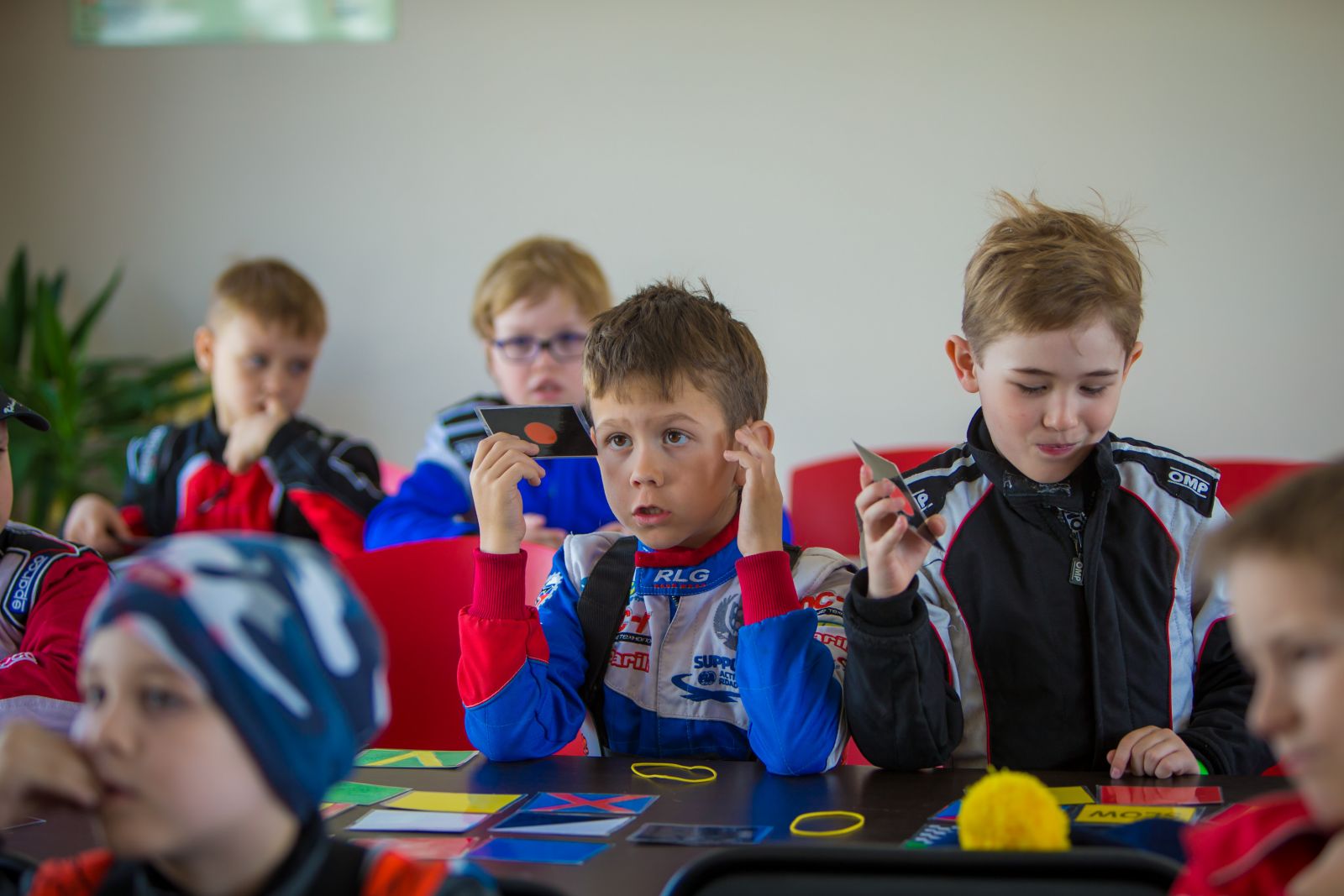
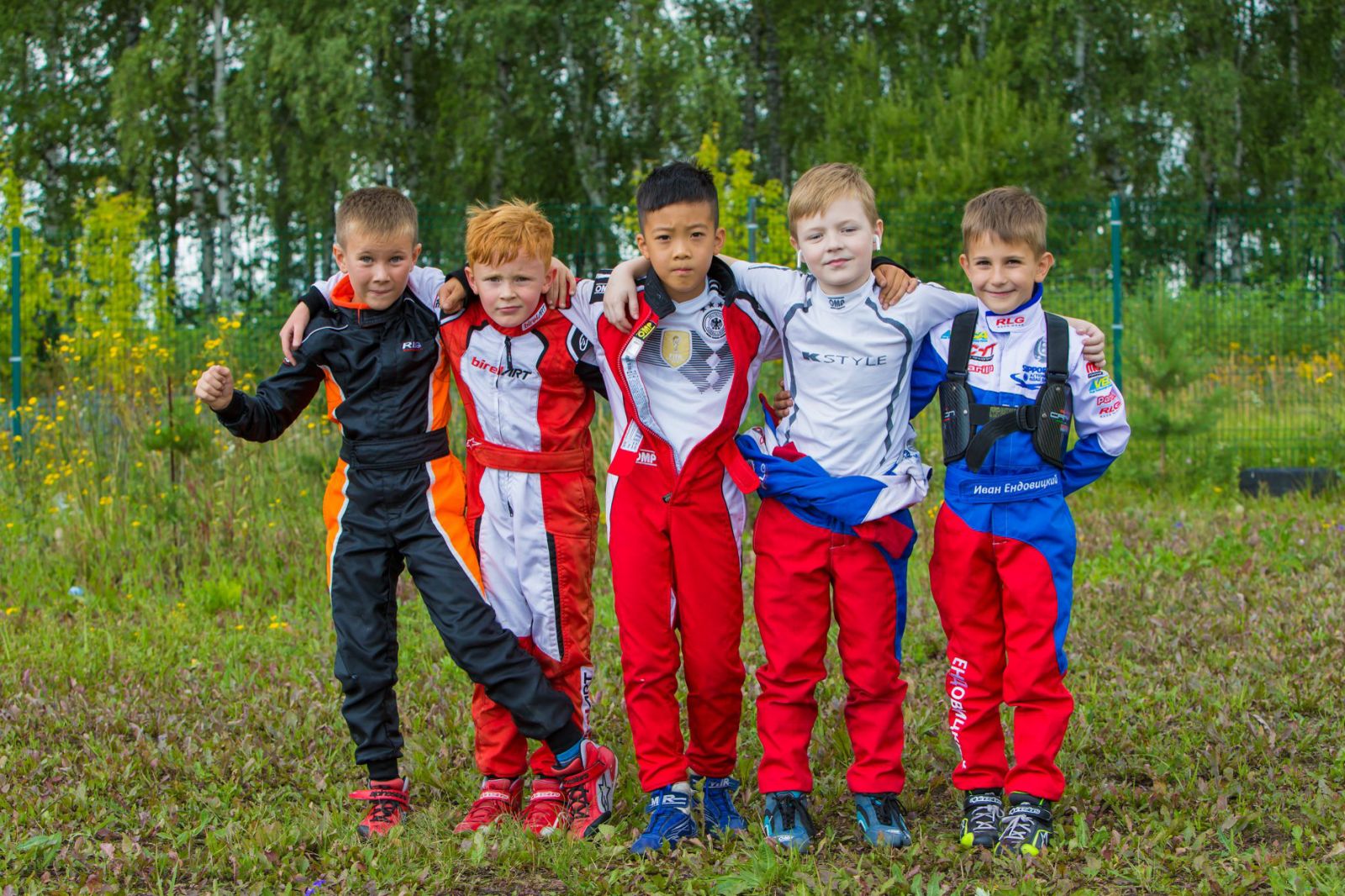
The RAF Academy is an exclusively Russian invention that has no analogy in the world of motorsport. Young racers who are 6 years old are invited to the Academy. Officially, karting competitions in Russia, as well as in Europe, are prohibited for boys and girls under 8 years old. But in the Academy, they learn to ride the kart as part of the training camp. In addition to racing training, academy participants get theoretical lectures, where experienced professionals teach children the rules of behavior on the track and tell about safe driving. Young athletes study regulations and flag signaling, and then consolidate their knowledge on the track. They train starts, practice correct trajectories and effective braking, prepare for serious races. For many, this is a fairly comfortable way to understand whether a child needs motorsport at all. Having passed the necessary exams, young pilots receive their first racing licenses, and in addition, beautiful racing suits in the colors of the Russian tricolor. All pilots of the RAF Academy have to attend official races and protocol events - briefings, ceremonial formations and the award ceremony in these racing suits. And all racers without exception are awarded at the RAF Academy. Micro class can be attended by the kids from 6 to 9 years old.
by Ekaterina SOROKINA
READ MORE
Speaking of the technical component, the Micro class uses the mono-chassis of the Russian manufacturer MGT-01. A minimum of settings to reduce the cost of the process. And a mono-motor for everyone - Parilla-60, the power of which is specially limited by an exhaust restrictor and a lower compression ratio for the Micro class. The motors are kept by the race organizer and are distributed by lot among the pilots of the Academy at each stage. The carburetor and exhaust pipe are also distributed. The pilots have their own chassis, but the motors need to be rented every time. But no doubt, that the engines are quite similar for everyone. Advantages can only be achieved by the quality of your piloting. In addition, the Micro class does not use the falling front bumpers, as in the older classes. For the formation of primary piloting skills of the RAF Academy, 7 stages are allocated on different routes.Next comes the Mini class. And it is quite different from its European counterpart. In Russia, there is no choice of motors in children's classes, and Parilla-60 motors of varying degrees of force are used in three classes at once - Micro, Mini and Super Mini. Traditionally in Italy racers from 8 to 12 years old compete in the Mini class. But this is a very big age difference. Is it possible for an eight-year-old pilot to compete on an equal footing with an older, more experienced, stronger rival who has been in this class for three years? In Russia, this problem was solved simply - the classes were divided. And instead of one, we now have two different classes - Mini - for pilots from 8 to 11 years old, and Super Mini - with racers aged 10 to 13 years old. And the parents can decide for themselves, whether their children will move to the older Super Mini, when they turn 10, or stay in the Mini class to collect more racing trophies.
The Super Mini uses a different carburetor, and the exhaust restrictor is as free as possible. The different weight of the pilots in full equipment is also taken into account. For the Mini class, the minimum pilot weight is 25 kg and the total weight with the kart must be at least 100 kg, for the Super Mini - 28 kg for the racer and 110 kg with the car. All this is done so that young athletes do not seek to jump to a higher class too early. Mono chassis are no longer used in Mini and Super Mini, and Russian pilots generally prefer Italian chassis.
OK Junior class and senior classes of the Russian Championship - OK and KZ-2 - are no different from European classes in terms of technical requirements. However, the initial training of pilots in Russia is so strong that it allows laying the foundation for improving racing skills in the future by themselves. Since childhood, Russian racers have been working a lot with telemetry, learning to build optimal trajectories, and in order to better memorize the configuration of the karting track, the morning often begins with a run on the track. The coach sometimes runs alongside, stopping to indicate difficult places. And after the races, videos are viewed to indicate errors.
Russia is a huge country, there are enough karting tracks, and the fastest pilots from all over the world - from Kaliningrad to Vladivostok - come to the competitions. The competition is very high, each class has its own recognized leaders. Due to the large number of participants, not everyone, of course, makes it to the final. But consolation races are arranged, after which you can get an additional ticket and continue the competition. The climatic season is, of course, not long, but there are a lot of races. In addition to the championship, there are also competitions in federal districts. Frankly speaking, the pilots often use these races as training before the start of a Championship. However, not anyone can get into the Russian championship. Only the Academy participants are welcomed to Mini after Micro class. The rest of the older classes must first earn titles and ranks in lower-level competitions. And, even having earned the right to get into the championship, the new recruits are first given red numbers so that they can be clearly seen on the track – it is some kind of a probationary period. Judges and marshals closely monitor these red numbers and only then decide whether the pilot deserves to continue to compete in the country's most prestigious championship.
The most popular classes in Russia are, of course, Micro and KZ-2. The fans in the stands freeze when the start of KZ-2 - the royal class in karting. It was July 2018, when the recognized European leader Anthony Abbass attended one of the stages of the Russian Championship in Ryazan at the Atron karting track. He won. However, it was not so easy for him to win. Ivan Chubarov, who became the champion of Russia in 2018 and confirmed his title in 2020, competed with the European racer and even overtook him by 3 seconds in one of the hits. But it was hard raining in the final, and Abbass piloted better. But all Russians are traditionally fast in rainy conditions. It’s often raining in Russia, and even in dry weather, the "hold" on the track does not appear immediately. Most of the tracks are quite slippery and racers get used to piloting in such conditions. And if you take the karting tracks in the southern regions, there is a lot of dust, which constantly flies onto the roadbed. And we also have such a concept as winter karting - this is already a mixture of karting and rally, but it a quite good chance for the pilot to learn to feel the car perfectly. It’s our climate and we use it of course!
The geography of the Russian championship is vast. The tracks are all different and each is interesting in its own way. Sometimes even representatives of Italian teams come to see how and what is arranged in Russian tracks. But for some reason, they don't bring their racers. And we are always glad to have guests! Russian hospitality is widely known. Come, it will be interesting!
At one time, the appearance of Russian pilots in Italy caused a lot of different reactions. Largely thanks to Nikita Bedrin and Kirill Smal, who are now already successfully piloting at Formula 4. Russian coaches for Nikita Bedrin and Kirill Smal agreed to talk about how they were at the start of their racing career and what was the recipe for the success of Russian pilots abroad.
Dmitry Sokol, head of the Sokol Racing team, coach and educator for Nikita Bedrin.
“I'm lucky! I had a lot of fast pilots in my team - Nikita Sitnikov, Pavel Bulantsev, who, in their time, also showed themselves successfully in European races, but Nikita Bedrin was always different from everyone. He had an amazing combination of a sense of the machine, obstinacy and a desire to win. He could have lost the qualification, but that did not mean that he would lose the race. He won back position after position and still saw the finishing flag first. This quality was highly appreciated by the fans. After all, it is worth a lot when the pilot starts off the tail, and then rises to the highest step of the podium. In 2015 he became the winner in the Mini class, in 2016 – he was the best in the Super Mini, and in 2017 he became the silver medalist in the Super Mini, but already because he began to devote more time to European races, where he also achieved success very soon. I didn't always agree with the team he chose in Italy, but that's his way. He has always been a very determined driver. It seems to me that determination is the main quality for a pilot. It is good when there are leaders in the class to follow, but you always need to learn to ride first, that is, to become a leader by yourself. Nikita Bedrin is a real leader. I wish him success, I’m sure he will succeed!”
Mikhail Mitrokhin, head of the NI Racing team, coach and educator for Kirill Smal.
“Kirill came to our team in 2014, and from the very beginning, he needed much more from racing than all other pilots. From the first season, we immediately began to fight for the podium. Sometimes we failed, but Kirill never gave up. He continued to work hard. We spent many months on tracks in Italy. Kirill was ready to drive 180 laps a day and so on from day-to-day. It seemed that he was no longer interested in anything in life, except for racing. He is like a robot, ready to work, to drive circles over and over again, honing the best trajectory. It seems to me that the secret of Russian pilots is precisely in the presence of an inner core. Russians have such a mentality, we can do our best for the victory. Again and again and again. I believe Kirill will show himself. He is already doing well, but, no doubt, he will have a great career in motorsport.”