


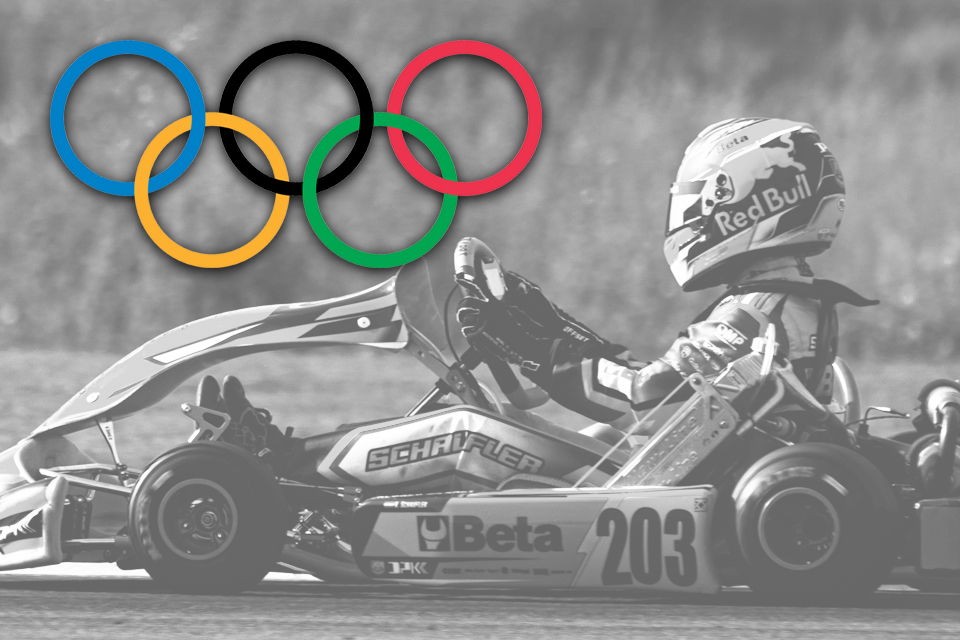
The dream of those who have reignited the debate about motorsport in the Olympics is based on the fact that, with each edition of the Olympic Games, new disciplines are regularly introduced. According to these sources, the fact that all Formula 1 drivers have a background in karting is proof that this sport is the only one capable of awarding medals to athletes potentially from any nation. For the record, the bid placed by the FIA last October to admit motorsport (not karting) as a discipline at the 2028 Los Angeles Olympics was rejected. This is why the press has recently been discussing the Brisbane 2032 Olympics, as it is likely the candidacy will be resubmitted.
Anyone familiar with motorsport knows that it only partly fits the definition of "sport," which, according to a universally recognized definition, is roughly as follows: "Any form of physical activity that, through organized or non-organized participation, aims to improve physical and mental well-being, develop social relationships, or achieve results in competitions at all levels." By its nature, motorsport is not an activity that rewards the athlete alone but rather the athlete-machine duo (not to mention the role of the team and track engineers). Even in competitions that appear to be "on equal terms," such as a race with identical monobrand karts, there is often a technical factor that can skew the results, leading to debates that have persisted for years. Not to mention the logistical and organizational issues, unless the aim is to make motorsport, in the form of karting, the laughing stock of the Olympic sports, as happened this year with breakdance —rebranded as "breaking"—which sadly became infamous worldwide due to online insults directed at a poor Australian athlete, who was judged clumsy and inadequate by those who probably don't even know what breakdancing is.
No kidding: karting today isn’t even an independent sport with its own identity anymore, it has been absorbed into the industry that sells the "dream" of becoming an F1 driver to those who can afford it. Very few people, if asked, could recall the name of one of the last three Karting World Champions, while every five minutes, we are bombarded with pictures of cute Leclerc at age six with hi cute bowl haircut and his cute red mini kart. Even in its ‘Olympic’ version, karting wouldn’t represent itself but, once again, its media-driven connection to F1. And we know for sure that neither in 2028 nor ever will an F1 season be interrupted to allow drivers to participate in a go-kart race in the Olympic Village parking lot. After all, it’s been decades—excluding Michael Schumacher—since we’ve seen an F1 driver seriously take part in a go-kart race.
For some time now, karting has found its promotion and the opening to new potential participants through much more concrete initiatives than the Olympics: in well-structured single-make championships, in series aimed at amateur drivers who may eventually decide to make the jump to more competitive categories. So, rather than seeing our sport in the Olympics, what we hope for is a return to the most authentic form of our sport, where anyone, at any age, can challenge themselves and others on the track in the most accessible form of motorsport.

