During the tyre war era, performance peaked at record levels and drove driver skills to new heights. Understanding what has changed technically can help us get a clear picture of the current situation and explain why a tyre war scenario today would be very complex to manage. We discussed this with one of the Technical Manager at MG Tyres, some days after MG was chosen as the official tyres supplier for the 2026 edition of FIA OK-N Junior World Cup in Viterbo.
How is a karting tire developed today? How is the compound produced, what is it composed of, and which components are natural (if any) versus synthetic?
A karting tire is initially developed based on the market needs of the moment, seeking the technical improvement of the product. In modern karting, the compounds produced are largely tested in laboratory and later tested in the track. The current compounds are made of several materials and the question is not related with the use of syntetic or natural rubber but if the combination of the necessary materials reaches the desired objective or not
What has been the impact on production processes of switching from natural rubber to synthetic compounds?
There’s this “mith” on the market that the tires have switched completely from natural to syntetic rubber at some point when, in reality, the tires manufacturers largely use syntetic rubber from a long time. The major change in terms of raw materials was the use of materials with low levels if PAHs (polycyclic aromatic hydrocarbons), because of environmental requirements, not necessarely the usage of syntetic rubber itself.
What are the main production differences between natural and synthetic rubber? And what about environmental differences?
In terms of production process, there are no great differences during the use of the different materials available in the market. Natural rubber is biodegradable and comes from renewable sources, but its production causes deforestation, loss of biodiversity, and the use of agrochemicals. Synthetic rubber, while it can be made with more sustainable components, depends on petroleum and has a much longer decomposition time, contributing to plastic pollution. The impacts of both types depend on their use, cultivation and production practices.
Which cost element has the greatest impact on the operations of a tire manufacturer? Some say tires are ‘too expensive.’ What should be considered when evaluating the market price of a tire set, and why can it be said that, given the performance they guarantee, the price is not as high as some think?
The materials used in the manufacture of a kart tire are specific and with elevated costs. The production process is complex, given the difficulty of handling, in reason of the materials grip. Any change in the tire, for as simpler as it may look, will have an impact in the final price. However, considering all costs involved during a race or championship, kart tires usually represent less than 10% on the overall expenses.
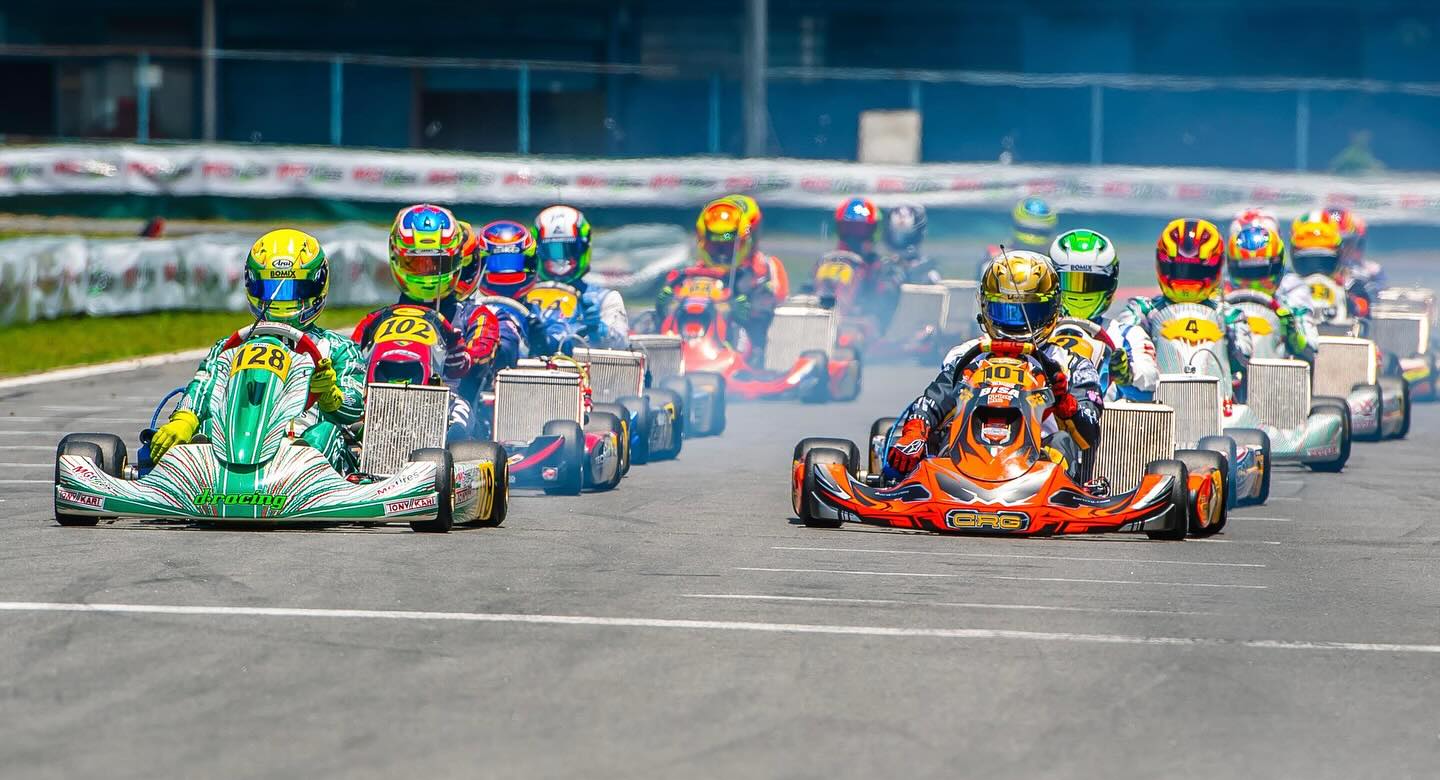
The cost of tires should be evaluated within the overall expenses incurred for a race: its impact is lower than that of other costs which, unfortunately, have increased more in modern karting
Is it possible to produce tires today in an eco-sustainable way? What direction are regulations taking in this regard?
The preocupation with the environment should be of costant care. Everyone must have the necessary permits in their respective countries and, parallel to that, to perform actions that will mitigate the impacts of tires usage over the environment. MG already adopts (which are not limited to) internal gestions inside the factory premisses to make the manufacture process more sustainable and efficient. All energy used in our factory comes from renewable sources. And we are in implementation process of the ISO 9001 and 14001, which will guarantee that our products and environment actions are according to international normatives. These are only some things that we may mention as actions taken by MG, but we have several others. These are non-obligated actions but are part as our conciousness as an environment responsible company.
In your opinion, has sports and regulatory evolution kept pace with tire development or vice versa?
The sport evolved a lot in the last years, specially as a business. The main difference maybe the fact that as the time passed, more rules were created towards the sport standardization, not only in terms of product development but also in the sporting regulation for each race. However, the demands for performance and durability always existed and will always exist, so MG always had to seek for a constant grow in all aspects, looking for new solutions in technology, modernization of the industrial plant, etc, always aiming for the market satisfaction.
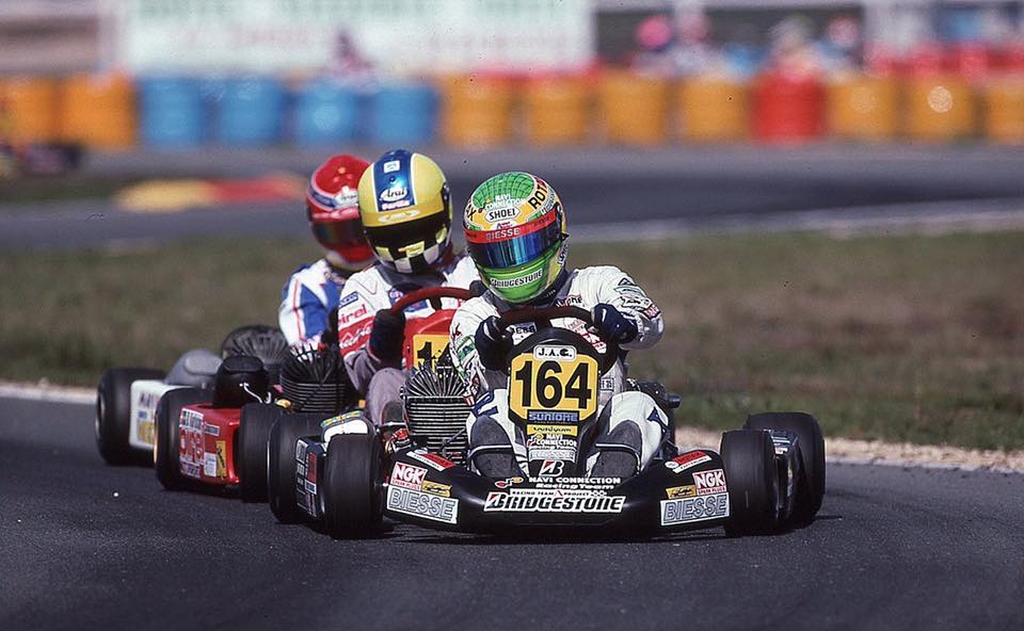
Under Tyre War karting has reached extreme performance levels. Such a regulation today would be hard to reconcile with the overall evolution not only of karting but of Motorsport as a whole, where the use of a single tyre brand has become the standard
What does tire usage during a race weekend reveal about a driver?
Winning a race is not about being the fastest driver on the track but also about performing a good equipment management, specially tires. The adequate kart setup, the use of the correct tires pressure for the situation and to have the sensibiliy of driving in a way to obtain from the equipment the best performance without compromissing the kart integrity demonstrate the difference between drivers.
Do you think using super high-performance tires would make karting more selective, or is it rather the ability to stand out using less performant tires that makes the difference among drivers?
A good driver is capable of managing tires with higher or lower performance. However, tires with super high performance tend to be more selective because of the complexity of their use.