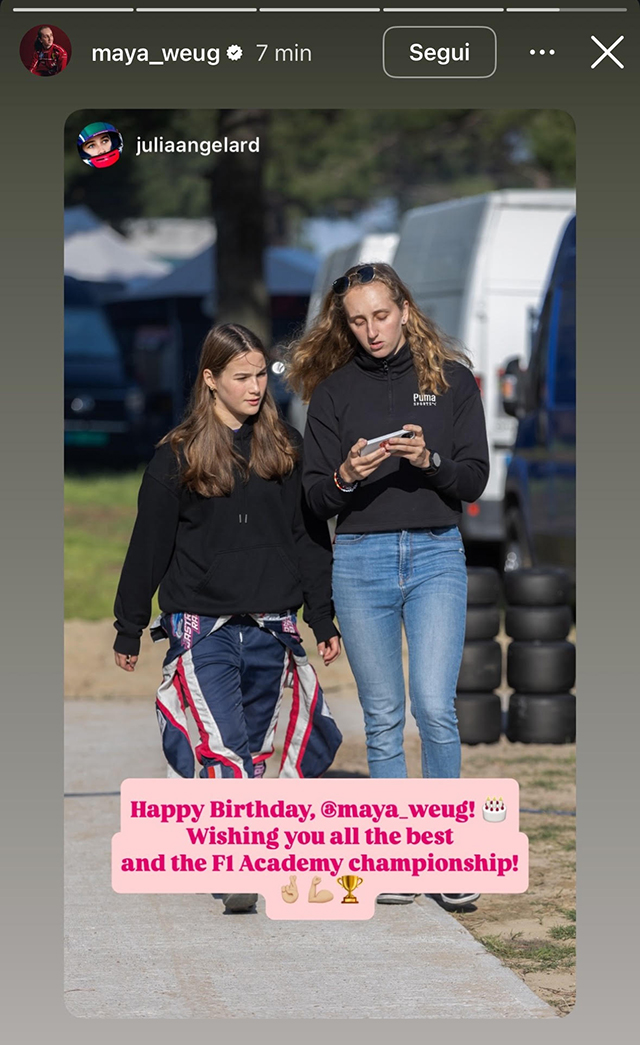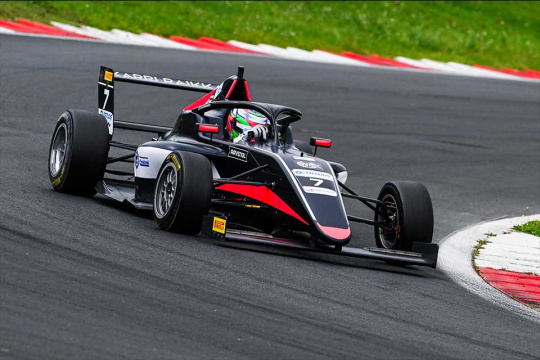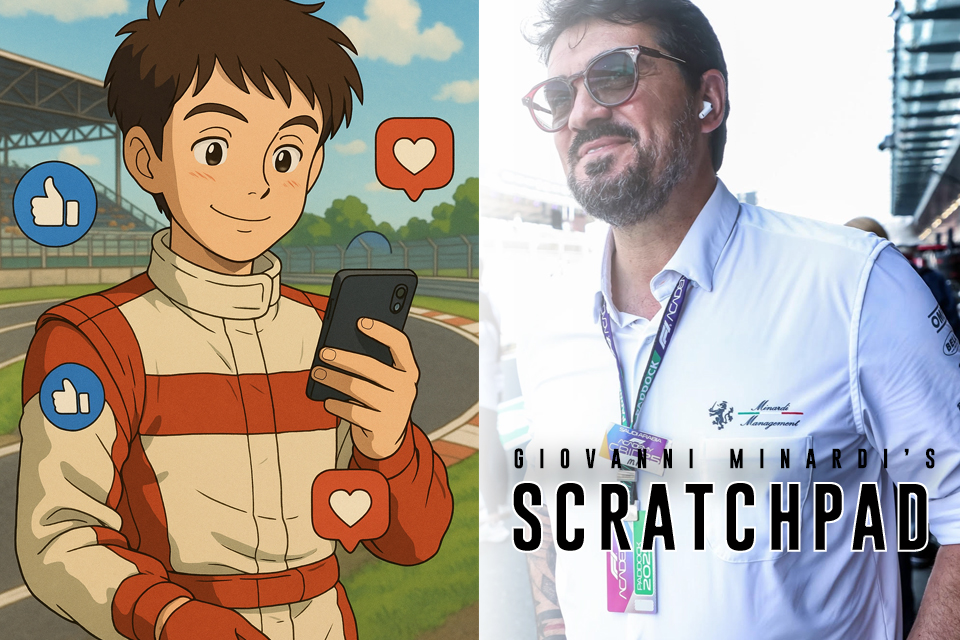
With the invention of commercial television nearly eighty years ago, it was said that everyone would have their “15 minutes of fame.” The recent evolution of media and the advent of social platforms have significantly extended that brief moment, giving almost anyone the opportunity to showcase themselves to the public — daily and with professional-level tools and effects. In top-level sports, particularly in Formula 1, drivers have essentially become "celebrities" thanks to social media. It’s now difficult to distinguish between a sport's "public" and its "followers." As absurd as it may sound, in lower-level formula categories, a good driver may be worth less than another equally skilled driver who also happens to be a popular influencer. We discussed this with Giovanni Minardi, who, as a manager, uses social media as a promotional tool and helps his drivers manage it effectively.
What role does social media play in motorsport today?
Today, social media plays a central role in motorsport. They are no longer just auxiliary tools, but real strategic platforms for communication, promotion, and managing relationships with the public. Social platforms allow teams, drivers, organizers, and sponsors to share their world in real time, build direct connections with fans, increase visibility, and strengthen their brand. They also offer concrete monetization opportunities through sponsorships, merchandising, and exclusive content. In a field where image and connection with the audience are as important as sporting results, social media has become an essential tool.
Which platform do you believe is most suited (among the classic ones: Facebook, Instagram, and TikTok) to our sector’s communication?
Each of these platforms has unique characteristics, but in motorsport, I believe Instagram is the most suitable, especially for visual, emotional, and professional communication. Motorsport thrives on powerful images: speed, adrenaline, design, and technology. Instagram is perfect for showcasing these elements, both through high-quality photos and dynamic content like reels. TikTok, on the other hand, is becoming increasingly important, particularly for reaching a younger audience and achieving viral visibility. It’s a less formal platform, great for creative and authentic content — behind-the-scenes glimpses, spontaneous moments, anecdotes, and personal stories. Those who find the right language for TikTok can grow their audience very quickly. Facebook still has some value for managing communities, events, and more structured communication, but its organic engagement has declined compared to the other two.
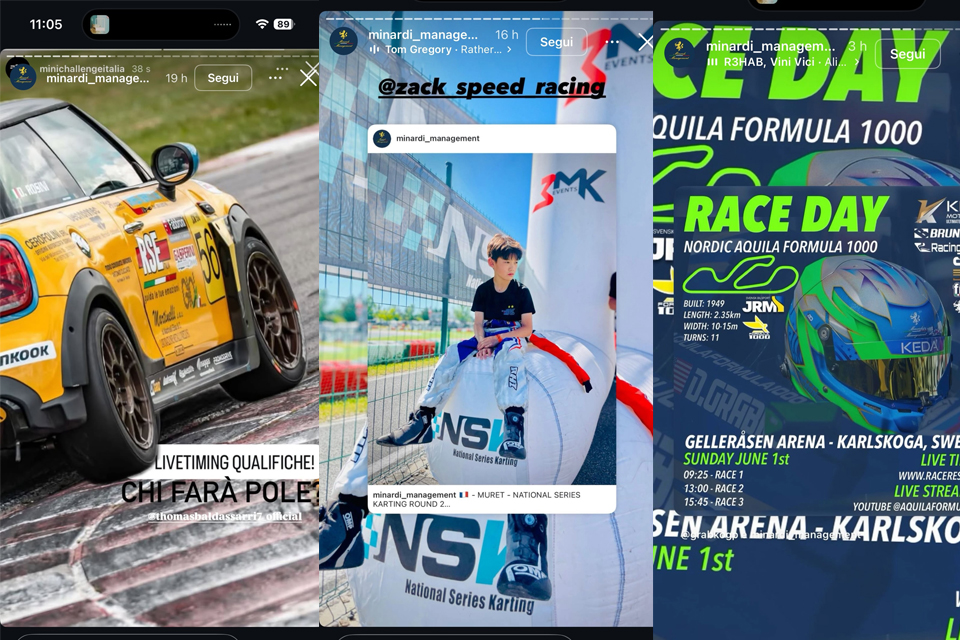
Instagram Stories are currently the most widely used — and effective — way to keep your social media followers informed in real time
What has your experience been with social media?
At Minardi Management, we recognize the crucial importance of social media in modern motorsport and actively incorporate it into our driver management strategy. We see online presence not just as a communication tool but as a strategic component of a driver’s professional growth.
Through platforms like Instagram and Facebook, we promote our drivers by sharing updates, results, and highlights from competitions. This activity not only increases their visibility but also helps build a strong and consistent image — essential for attracting sponsors and building a fan base.
Our agency takes a structured approach to digital communication, using social media to tell our drivers’ stories, highlight their progress, and engage the audience authentically. This reflects our awareness that, in modern motorsport, personal storytelling and fan connection are key to success.
In summary, Minardi Management’s experience shows that a strategic and mindful use of social media can be a determining factor in a driver’s development path, offering visibility and strengthening their presence on the international motorsport stage.
Why is being on social media essential for a young driver?
Being on social media is essential for a young driver because it helps build their image, gain exposure, and create a direct connection with fans. In a competitive field like motorsport, talent on the track is not enough — visibility matters too. Social media is a key tool to attract sponsors, share one’s journey, and stand out. Being authentic and active online helps to emerge and adds value to a career from its earliest stages.
Driver, Influencer, or Content Creator? How wise is it for a driver — especially a very young one — to invest heavily in creating social content?
For a driver, especially a young one, being active on social media is helpful, but it must be approached with balance and common sense. Creating content can help build visibility and foster valuable connections, but it should never become a distraction from athletic and personal development.
Priority should always be given to on-track preparation, technical training, and focus on competitive goals. It’s smart to take care of one’s image — even smarter to do so with the support of professionals, so as not to divert energy from the main job. Intelligent social media use can be a great ally, as long as it doesn’t replace what really counts: performance.
Parents managing social profiles: is there a line they shouldn’t cross?
Yes, parents should support without taking over. They can help manage and protect the profile, but it’s important that the voice and identity remain those of the driver. Authenticity is essential, especially in building a genuine connection with the audience.
Rely on a social media manager or manage the profile personally? Personal or “professional” account?
Whether to manage social media personally or with a manager depends on age, time availability, and objectives. A young driver can manage their own accounts to maintain authenticity, but it requires consistency and awareness. Hiring a professional becomes helpful when communication becomes part of the career: it ensures quality, consistency, and visibility, allowing the driver to focus more on racing. As for the type of profile, the best choice is a hybrid approach: professional in form, personal in content. People want to see the athlete — but also the person behind the helmet.
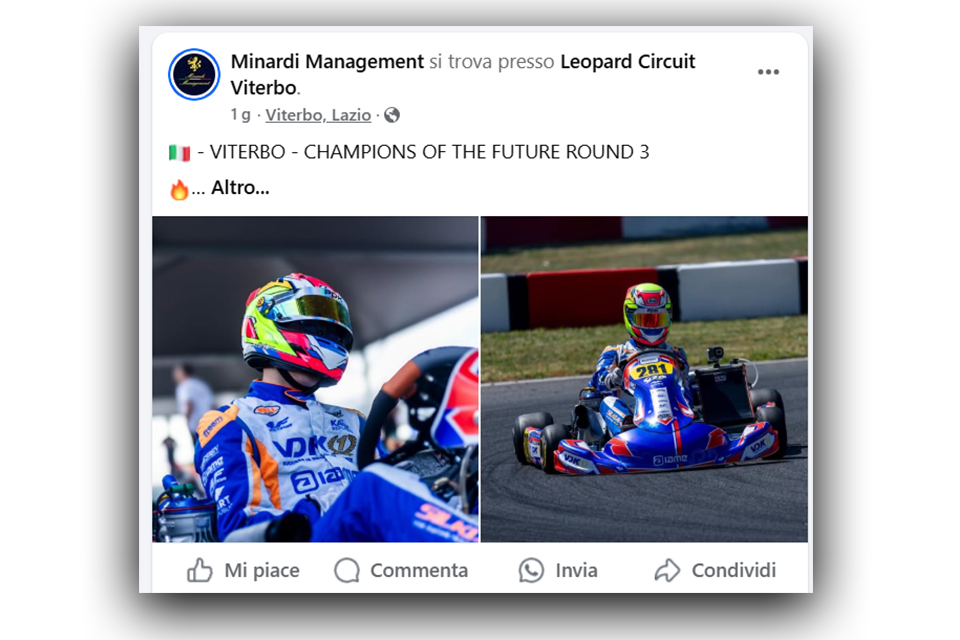
Facebook, with its more mature audience, remains a valuable tool for managing communities, events, and more structured communications.
Returning to last month’s topic: how much weight does the “social” aspect carry in sponsorship proposals?
The “social” aspect carries a lot of weight in sponsorship proposals today. Beyond sports results, sponsors pay close attention to a driver’s visibility and image — and social media is the main tool to assess that. A well-maintained, active, and followed profile conveys value, professionalism, and potential return on brand exposure.
In many cases, social media numbers (followers, engagement, content quality) can be the deciding factor between an accepted or rejected proposal. Partners want to be associated with figures who can communicate well, engage an audience, and represent their brand — even off-track. In short: today, the combination of “sporting + social” is often what convinces a sponsor to invest.
What should be shared: only victories, or a more realistic story that includes struggles and tough moments too?
Only sharing victories isn’t enough. Today, audiences — and sponsors — are looking for authentic, human stories, not just results. Showing difficulties, mistakes, effort, and low moments makes communication more real and engaging. People become attached when they see the whole journey, not just the finish line. A realistic narrative, told with sincerity and maturity, conveys character, resilience, and passion — qualities that matter both on and off the track. Ultimately, it’s the complete story — with highs and lows — that creates a lasting connection with viewers and listeners.
In conclusion: what’s a profitable way for a young driver to use social media, and what areas require the most balance?
A profitable way for a young driver to use social media is to share their journey authentically — showing dedication, passion, and personality, not just results.
It’s important to engage the audience, offer behind-the-scenes content, and build a community. But balance is key: social media must not become a priority or an obsession.
Drivers should avoid overexposure, maintain consistency, and remember that real growth always starts on the track.