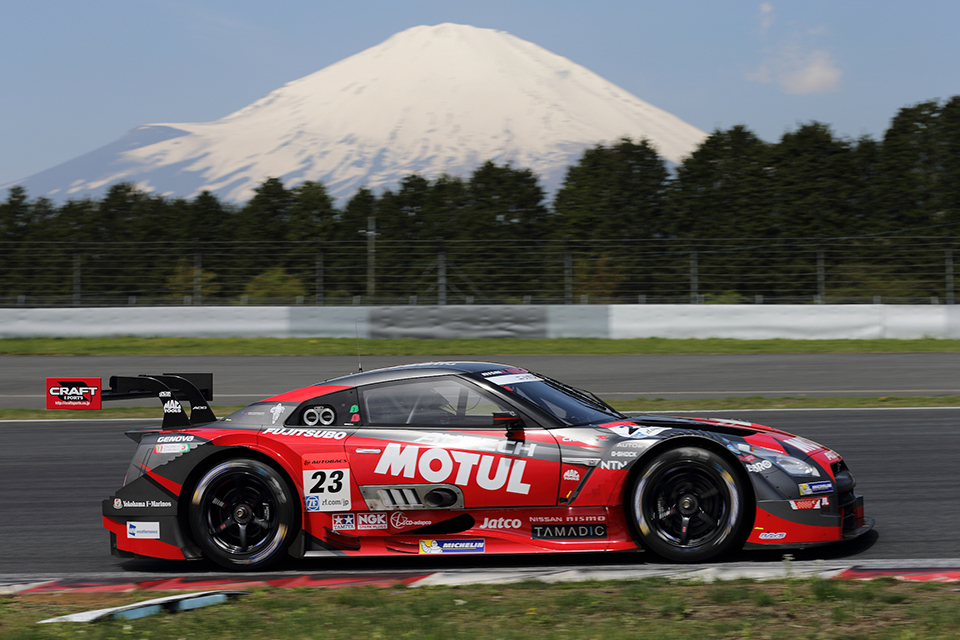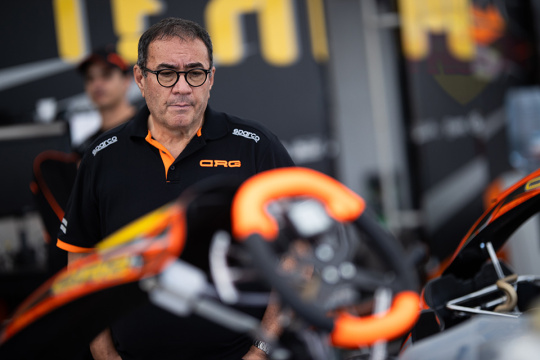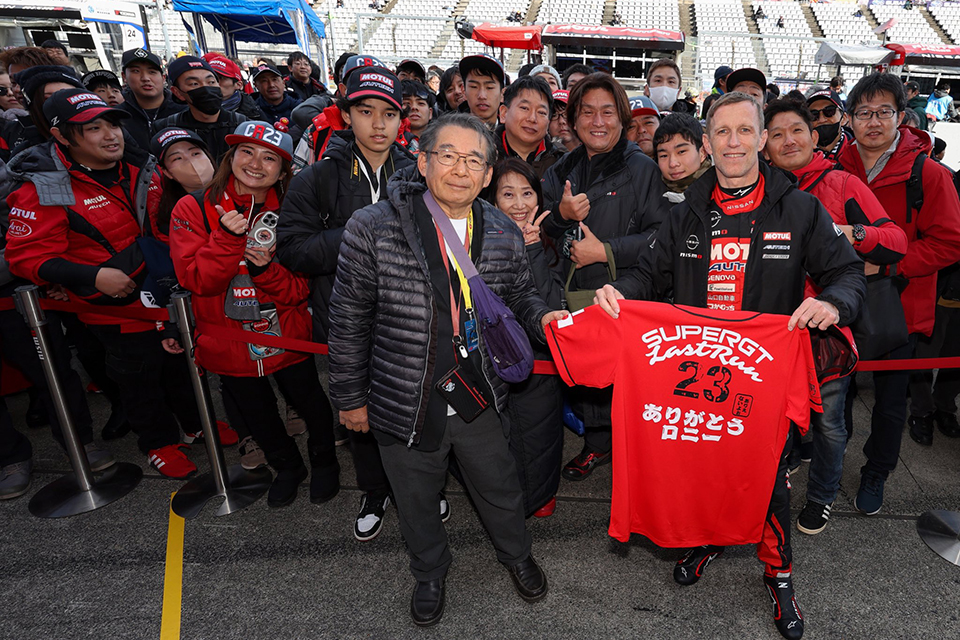
Ronnie Quintarelli has made Italians proud in Japan like no one before him. The Quintarelli-Nissan duo achieved exceptional results over a long and fruitful partnership: countless podiums, pole positions, and victories, including four overall titles between 2011 and 2015—a record still unmatched. Among his other notable successes are victories in the 1000 km of Suzuka (2005 and 2012) and the prestigious JAF Grand Prix at Fuji Speedway (2011). Quintarelli is also a karting icon of the 1990s, a golden era for the sport that paved the way for his unexpected yet unique career in a country that welcomed, celebrated, and made him famous. Because let’s not forget—there’s more to global motorsport than just Formula 1.
Ronnie, tell us about your karting experience as a driver. What memories do you have of those years (especially as vice-champion), and is there a race or episode that stands out as unforgettable?
«Looking back on my karting years in the ’90s, my most valuable memories are from the time I spent racing in the 60 Mini Kart category with my dad as my mechanic. We tried our best despite knowing very little about mechanics. I remember competing in the Margutti Trophy or the Trofeo delle Industrie at Parma’s legendary Mondial Pista, where, on the same race weekends, you’d see incredible drivers in the higher categories. Watching them was mesmerizing, and I tried to learn as much as I could—they were my heroes!
One unforgettable episode was being invited to a TV broadcasting National Morning Show show in Rome, on Christmas Day, in 1992. It was my first year in 100 Junior, and they asked me to bring my kart to the studio for the live broadcast. That was a huge thrill for me.»
This year, it came out that four-time F1 World Champion Verstappen hasn’t driven a kart since 2016 (due to contractual and other reasons). You, on the other hand, not only train with karts but also compete. How do you explain this difference in approach, and why do you remain so actively involved in karting?
«One key difference is that F1 drivers are constantly racing—every two weeks, plus simulator sessions. They’re always in peak physical shape and don’t feel the need to train with karts. But it’s a shame because Max and his family grew up with karting, so I thought he might get back into it from time to time.
For me, since I only raced in Super GT and not in Super Formula, my schedule had fewer races in a season. Karting is an excellent way to train both physically and mentally. It allows me to disconnect and mentally recharge when I hit the track.»
You’ve raced in OK Senior. What’s your take on this category, which was born in Italy to revive the golden age of national 100 and Formula A karting? Does it have room to grow, or will single-brand championships dominate?
«Judging by the number of entries in international races—not just OK Senior but also other CIK-FIA and WSK categories—I’d say karting is thriving. Single-make championships are a great alternative at the national level, offering drivers the chance to race high-quality karts at more accessible costs.»

Ronnie Quintarelli racing a Formula Super A Birel-Rotax in 1997
Comparing OK Senior with the Super A Formula karts you drove in the past, what are the main differences? Do you prefer single-speed or KZ, given your success in Formula C as well?
«Driving philosophy has changed entirely since the Super A Formula era. Back then, you’d enter corners with one hand on the wheel and the other on the air filter to adjust the carburetor for peak engine performance. It required more calculation, and experience played a huge role. Today’s karts are incredibly high-quality but leave less room for the kind of management we used to do. The mechanic sets the carburetor, and it’s full throttle from start to finish, with both hands on the wheel. The only real management is during battles. KZ, on the other hand, is like a mini race car. I own one and alternate between it and single-speed karts, depending on my training needs. KZ is more physically demanding, while single-speed requires more precise handling.»
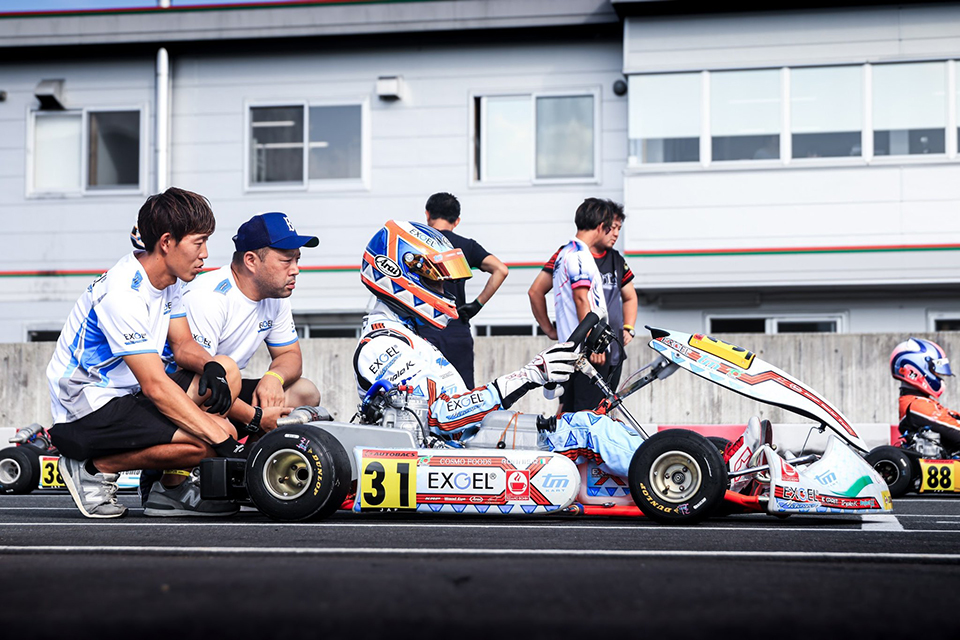
Quintarelli competing in the Japanese OK (there is no OKN in Japan yet)
Japan is your second home. How would you describe Japanese motorsport? It seems like a self-contained world, independent of Europe’s F1-centric focus. How did you first end up in Japan?
«I owe my journey to karting. In 2002, after a strong performance in the Super A Formula World Championship, I was contacted by Pierre-Henri Raphanel, a former French F1 driver who built a second career in Japanese touring cars. He’d read about me in a French magazine, was impressed, and invited me to a test in Japan at the end of 2002. That’s how it all began. As for Japanese motorsport, it’s now at an elite level. Both teams and drivers are exceptionally well-prepared, even at a young age.»
«I owe my journey to karting. In 2002, after a strong performance in the Super A Formula World Championship, I was contacted by Pierre-Henri Raphanel, a former French F1 driver who built a second career in Japanese touring cars. He’d read about me in a French magazine, was impressed, and invited me to a test in Japan at the end of 2002. That’s how it all began. As for Japanese motorsport, it’s now at an elite level. Both teams and drivers are exceptionally well-prepared, even at a young age.»
Japanese racing academies seem similar to FIA’s European system, with young drivers progressing through single-seaters. Are there similarities between the two worlds?
I’m not familiar with the specifics of European academies, but they seem highly professional and prepare drivers thoroughly for Formula 1.
«In Japan, things are more casual since it’s a smaller world. Toyota and Honda hold annual audition days to test around ten drivers. The most promising are supported as they progress from Formula 4 to Super Formula Lights (equivalent to Formula 3) and eventually to Super Formula and Super GT, typically starting in the GT300 class.
For drivers suited to an overseas experience, some are sent to Europe as early as Formula 4. Nissan, focused solely on Formula E and Super GT, currently lacks an academy.»
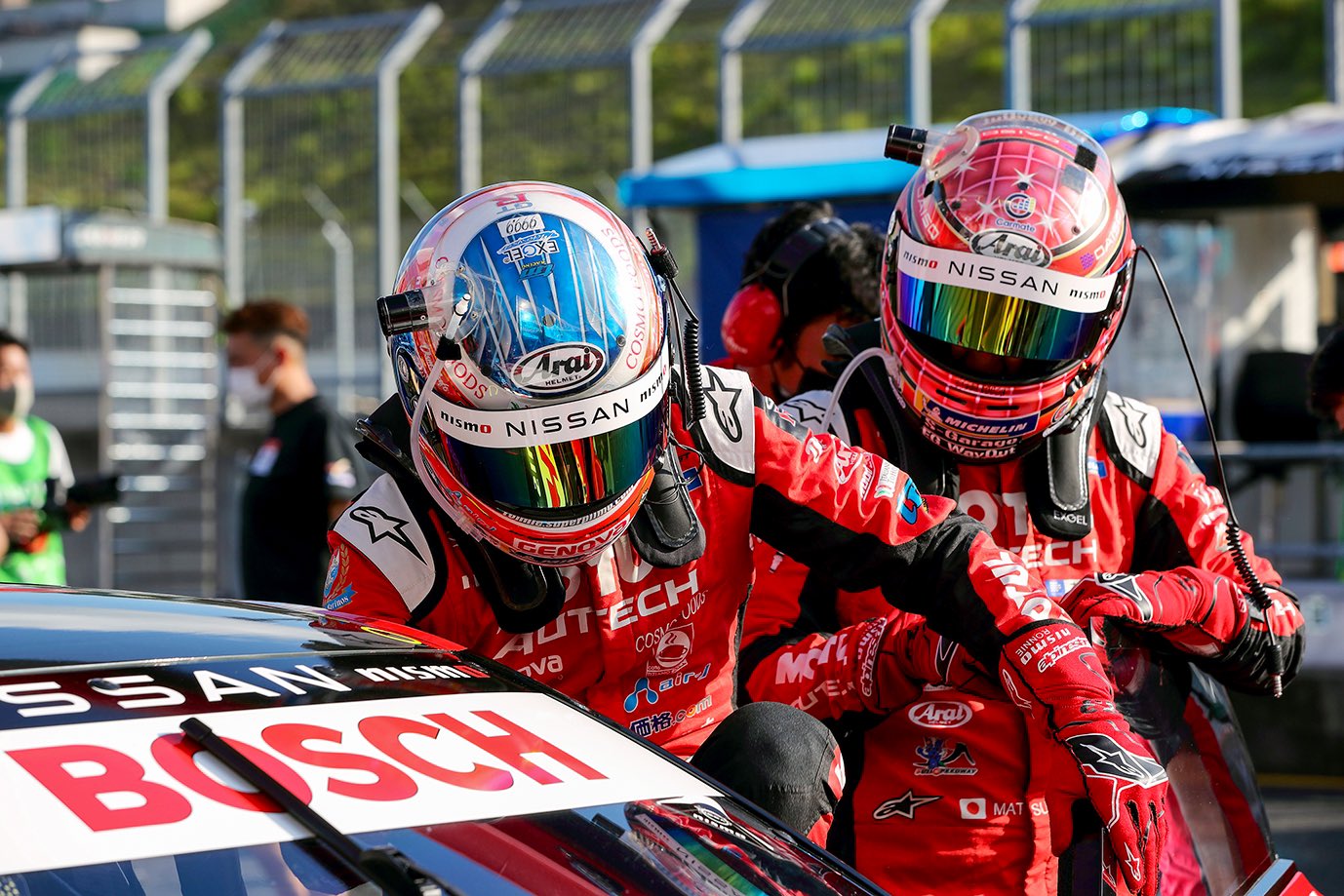
Quintarelli on a Nissan, a classic in the Japan GT
What challenges do Japanese drivers face when transitioning to international competition?
«Miyata, for example, is one of the most talented and determined drivers Japan has produced. Moving into a completely new environment like Formula 2, he’s struggled to learn the tracks and adapt. I’m sure he’ll show his true potential next season. Off the track, language and cultural barriers are tough for Japanese drivers. However, globalization has improved this significantly, as seen with Tsunoda in F1 and Hirakawa in WEC.»
Conversely, what difficulties might European drivers face when competing in Japan? What advice would you give based on your experience?
«For a foreigner, succeeding in Japan right away has become incredibly challenging. It’s no longer like the old days when you could outperform locals after just a few hours of testing. For instance, Theo Pourchaire, the 2023 Formula 2 champion, struggled in Super Formula this year and couldn’t continue. The only foreign drivers who have done well in their first year recently were Pierre Gasly (runner-up in 2016) and Liam Lawson, who impressed last year by finishing second behind Miyata. My advice: come to Japan with humility and be ready to start from scratch.»
Finally, motorsport isn’t just about F1. What other categories and series offer the best opportunities for professional drivers today?
«Any championship where a skilled driver can secure a contract with a manufacturer or top team is a great opportunity. There are several incredible, high-level series. The DTM was once considered F1 for touring cars, but today I’d point to championships like the WEC and GT World Challenge.»
Career in Numbers
149 Races in 20 Seasons
(Overall - GT500 Class)
4 SUPER GT Titles: 2011, 2012, 2014, 2015
(overall record)
18 Wins
(3rd all time)
15 Pole Positions
(2nd all time)
1026.5 Points
(4th all time)
149 Races in 20 Seasons
(Overall - GT500 Class)
4 SUPER GT Titles: 2011, 2012, 2014, 2015
(overall record)
18 Wins
(3rd all time)
15 Pole Positions
(2nd all time)
1026.5 Points
(4th all time)