


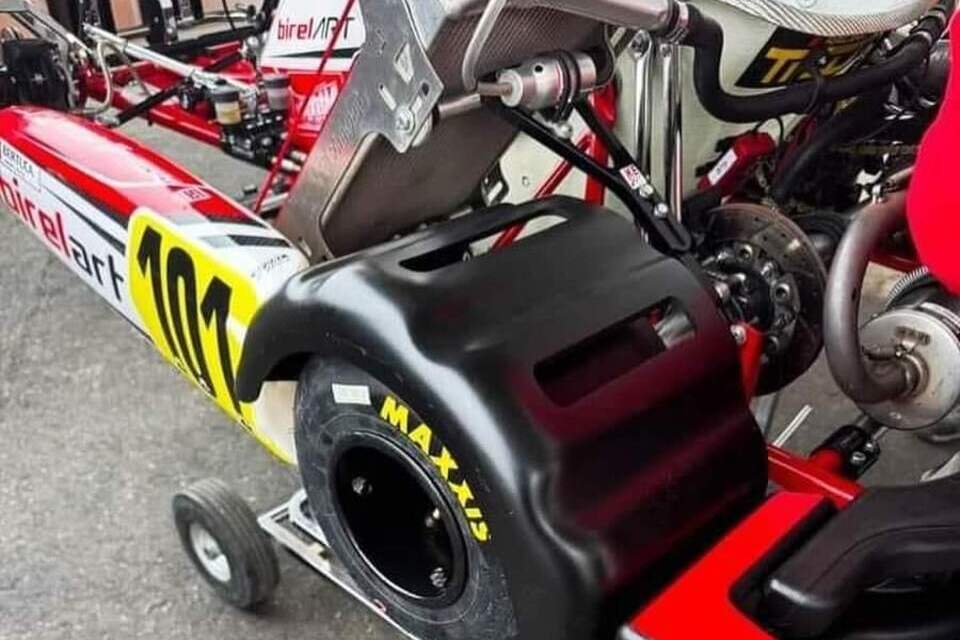
Let’s set aside the ugliness for now and try to understand the reasoning behind this. The FIA has always aimed to enhance safety in a sport that, it must be said, can never entirely eliminate risk—it’s motorsport, after all. That said, this latest attempt, which many hope will lead to nothing, raises questions.
The idea is to reduce the chances of a kart taking off using the wheels as a ramp and, more broadly, to minimize incidents triggered by ‘wheel-to-wheel’ contact. This intensified research seems to have been driven by two tragic accidents in 2024: the first in Norway during a monobrand trophy event, where a young driver lost his life in a start-phase crash, and the second, just two weeks ago in Uruguay, where an adult KZ driver died in an incident with unclear dynamics. Reports suggest the accident occurred at low speed, with the fatal trauma in the abdominal area. Sources in the region have indicated that no rollover occurred, though details remain murky.
The idea is to reduce the chances of a kart taking off using the wheels as a ramp and, more broadly, to minimize incidents triggered by ‘wheel-to-wheel’ contact. This intensified research seems to have been driven by two tragic accidents in 2024: the first in Norway during a monobrand trophy event, where a young driver lost his life in a start-phase crash, and the second, just two weeks ago in Uruguay, where an adult KZ driver died in an incident with unclear dynamics. Reports suggest the accident occurred at low speed, with the fatal trauma in the abdominal area. Sources in the region have indicated that no rollover occurred, though details remain murky.
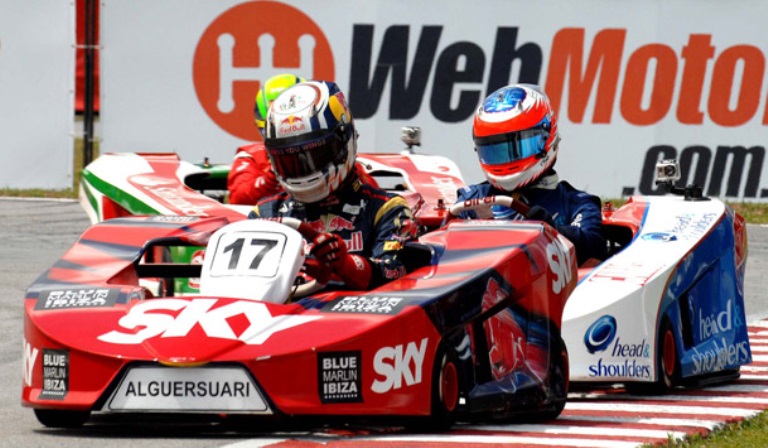
A type of kart that is being considered to be developed?
Covering kart wheels is, according to some, the only way to reduce such accidents—but is it really? Since the late 1980s, semi-custom bodywork has gradually been introduced on karts, evolving into an officially sanctioned system in the 1990s aimed at increasing safety. With continuous research, development, and homologation updates, the system has been fine-tuned. Yet, as anyone familiar with kart tracks knows, flipping still occur. This happens partly because such incidents are relatively common in this sport and partly because wheel contact isn’t always the only trigger. This is a complex issue that deserves thorough discussion, involving input from technicians, drivers, and true experts. But the debate isn’t just about safety; it’s also about the sport itself. Over the years, bodywork has created sporting challenges by encouraging overly aggressive driving styles—particularly among younger drivers—which regulations have only partially mitigated. Are we sure turning racing karts into rental karts—the comparison many are undoubtedly making—is the right path? After all, covering the wheels might deliver the final blow to a sport that would not only betray its origins as a simple, rugged, and agile vehicle but might also lose its value as a stepping stone for open-wheel racing.
Speak to a rookie Formula 4 driver. Have a chat and ask them about on-track behavior and how aggressive the drivers are. Where do you think they learned to bump and bang, effectively becoming less skilled drivers than they could be?
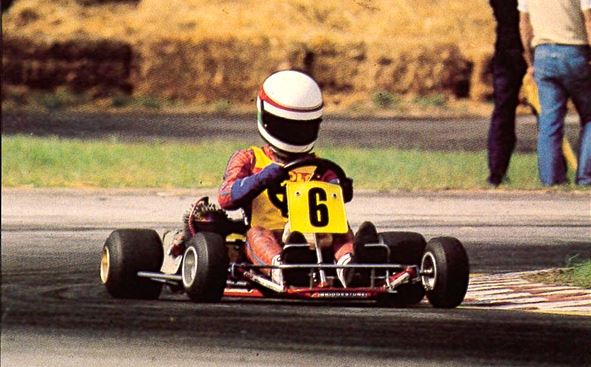
An open-wheel kart, but lightweight, is actually a much safer vehicle than an ultra-covered and heavy one — in case of a rollover
And please, don’t dismiss this as nostalgia—it’s not about that. A kart overtaking maneuver in the 1980s was surgical: you either made it or you didn’t. There was either space for the pass, and you seized "that" moment, or you were out—off the kart, off the track, sometimes even into fences or the emergency room. Today, you might still end up in the ER, but you haven’t learned to drive in the process.
There are many angles to consider here, and yes, it’s good that the FIA works on safety. We should all be thankful for initiatives like the homologation of CMR helmets for kids, improved racesuit materials, track certifications, and life-saving innovations like the FIA 8870-2018 chest and rib protector. But when governing bodies take actions that could alter the nature of our sport, it’s only fair (and we hope manufacturers, operators, team managers, and yes, drivers, will join in) to raise a hand and ask: is this truly necessary?
There are many angles to consider here, and yes, it’s good that the FIA works on safety. We should all be thankful for initiatives like the homologation of CMR helmets for kids, improved racesuit materials, track certifications, and life-saving innovations like the FIA 8870-2018 chest and rib protector. But when governing bodies take actions that could alter the nature of our sport, it’s only fair (and we hope manufacturers, operators, team managers, and yes, drivers, will join in) to raise a hand and ask: is this truly necessary?


